






Treatment 治疗
Knee Arthroscopy 膝关节镜手术
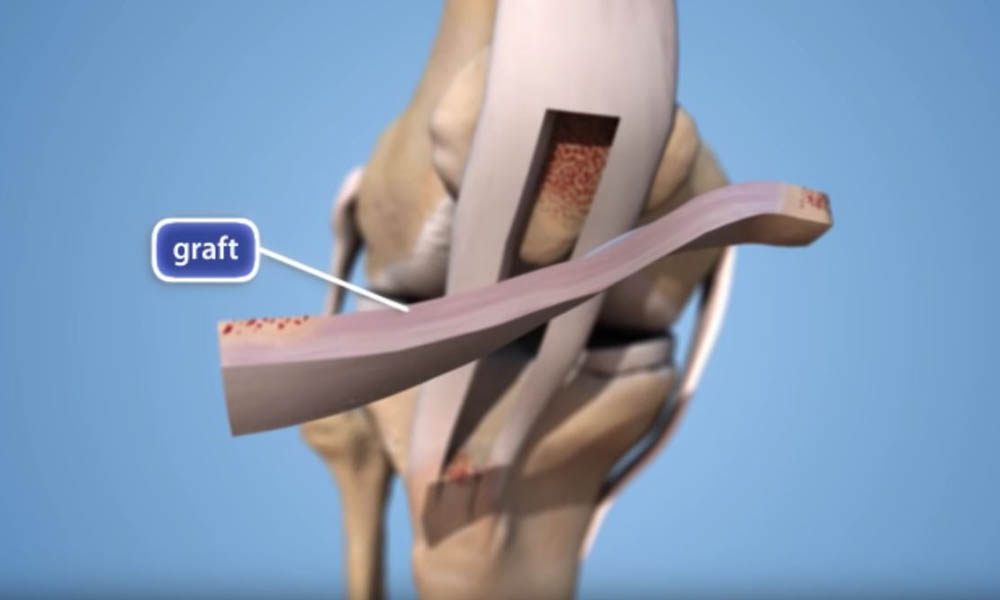

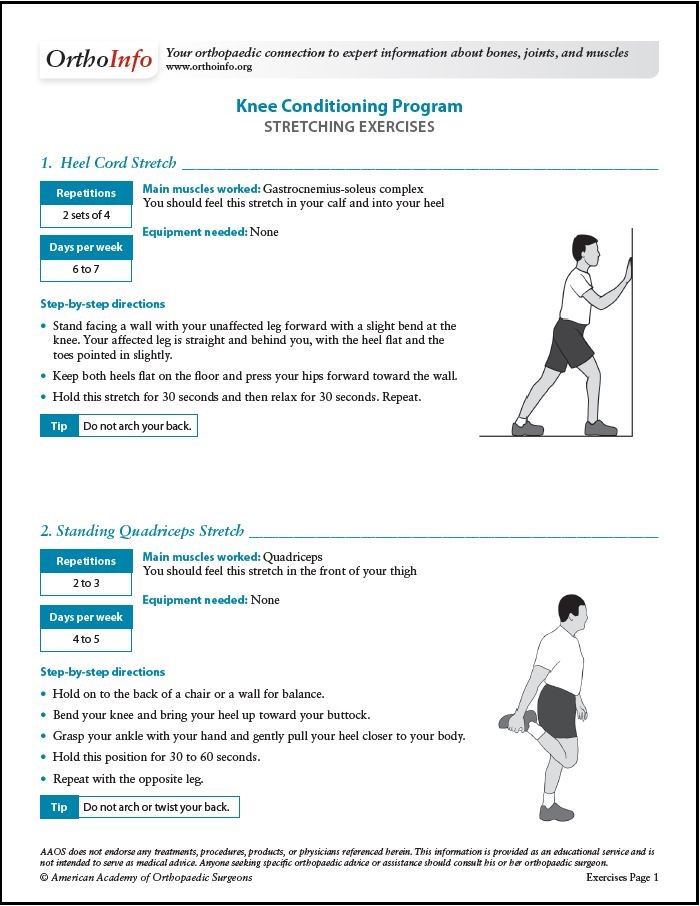
Knee arthroscopy is a surgical procedure that allows doctors to view the knee joint without making a large incision (cut) through the skin and other soft tissues. Arthroscopy is used to diagnose and treat a wide range of knee problems.
膝关节镜手术是一种外科手术,通过该手术医生可以在不对皮肤和其他软组织进行大切口的情况下查看膝关节。关节镜用于诊断和治疗各种膝部问题。
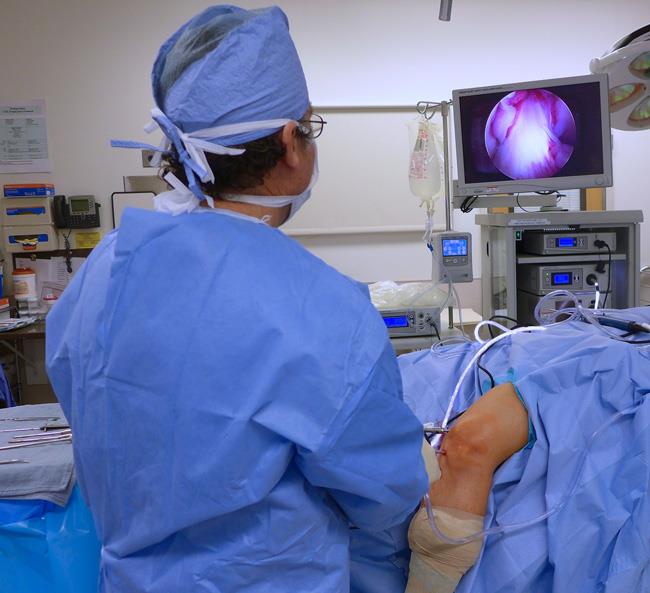
During knee arthroscopy, your surgeon inserts a small camera, called an arthroscope, into your knee joint. The camera displays pictures on a video monitor, and your surgeon uses these images to guide miniature surgical instruments.
在膝关节镜手术过程中,您的外科医生将一台小型摄像机,称为关节镜,插入您的膝关节。摄像机将影像显示在视频监视器上,外科医生利用这些影像来引导微型手术器械。
Because the arthroscope and surgical instruments are thin, your surgeon can use very small incisions, rather than the larger incision needed for open surgery. This results in less pain and joint stiffness for patients, and often shortens the time it takes to recover and return to favorite activities.
由于关节镜和手术器械非常纤细,外科医生可以使用非常小的切口,而无需开刀手术所需的较大切口。这会使患者疼痛和关节僵硬更少,并且通常缩短恢复并重返喜爱活动的时间。
Anatomy 解剖学
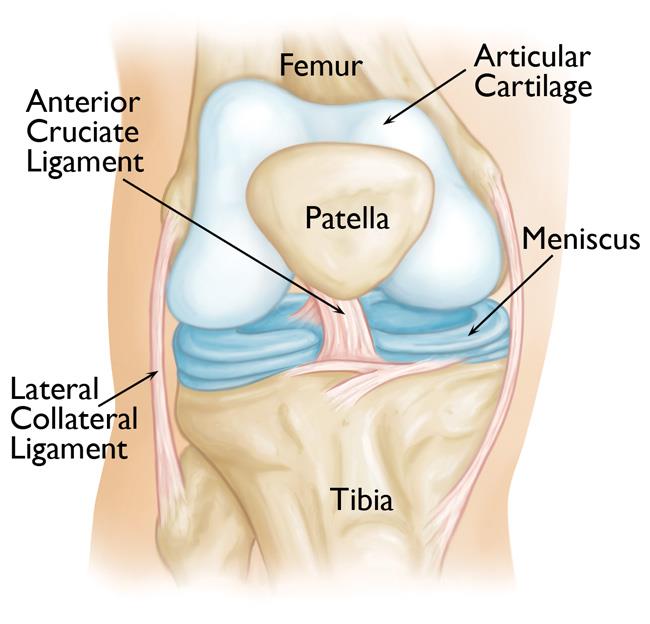
Your knee is the largest joint in your body and one of the most complex. The bones that make up the knee include the lower end of the femur (thighbone), the upper end of the tibia (shinbone), and the patella (kneecap).
你的膝关节是身体中最大的关节,也是最复杂的关节之一。组成膝关节的骨骼包括股骨(大腿骨)的下端、胫骨(小腿骨)的上端以及髌骨(膝盖骨)。
Other important structures that make up the knee joint include:
构成膝关节的其他重要结构包括:
- Articular cartilage. The ends of the femur and tibia, and the back of the patella are covered with articular cartilage. This slippery substance helps your knee bones glide smoothly across each other as you bend or straighten your leg.
关节软骨。股骨和胫骨的端部以及髌骨的后侧被关节软骨覆盖。这种光滑的物质可在你弯曲或伸直腿时帮助膝骨彼此顺畅滑动。 - Synovium. The knee joint is surrounded by a thin lining called synovium. This lining releases a fluid that lubricates the cartilage and reduces friction during movement.
滑膜。膝关节被一层薄薄的衬里包围,称为滑膜。该衬里分泌一种液体,润滑软骨并在运动过程中减少摩擦。 - Meniscus. Two wedge-shaped pieces of meniscal cartilage between the femur and tibia act as shock absorbers. Different from articular cartilage, the meniscus is tough and rubbery to help cushion and stabilize the joint.
半月板。位于股骨与胫骨之间的两块楔形半月板软骨起缓冲作用。与关节软骨不同,半月板坚韧且富有弹性,有助于缓冲与稳定关节。 - Ligaments. Bones are connected to other bones by ligaments. The four main ligaments in your knee act like strong ropes to hold the bones together and keep your knee stable.
韧带。骨与骨之间由韧带相连。膝关节的四条主要韧带如同坚固的绳索,将骨骼固定在一起并保持膝关节稳定。- The two collateral ligaments are found on either side of your knee.
两条侧副韧带位于膝盖的两侧。 - The two cruciate ligaments are found inside your knee joint. They cross each other to form an X with the anterior cruciate ligament in front and the posterior cruciate ligament in back.
两条交叉韧带位于膝关节内部。它们相互交叉形成一个“X”形,前交叉韧带在前方,后交叉韧带在后方。
- The two collateral ligaments are found on either side of your knee.
When Knee Arthroscopy is Recommended
何时建议进行膝关节镜检查
Your doctor may recommend knee arthroscopy if you have a painful condition that does not respond to nonsurgical treatment. Nonsurgical treatment includes rest, physical therapy, and medications or injections that can reduce inflammation.
如果非手术治疗无效且仍然疼痛,医生可能会建议行膝关节镜手术。非手术治疗包括休息、物理治疗以及可减轻炎症的药物或注射。
Knee arthroscopy may relieve painful symptoms of many problems that damage the cartilage surfaces and other soft tissues surrounding the joint.
膝关节镜检查/手术可以缓解由损伤关节软骨表面及周围其他软组织的多种问题所引起的疼痛症状。
Common arthroscopic procedures for the knee include:
膝关节常见的关节镜手术包括:
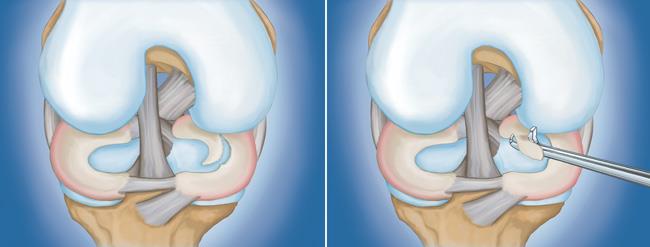
- Partial meniscectomy (removal of the meniscus), repair of a torn meniscus, or meniscus transplantation
部分半月板切除术(切除半月板)、撕裂半月板的修复或半月板移植 - Reconstruction of a torn anterior cruciate ligament or posterior cruciate ligament
前交叉韧带或后交叉韧带断裂的重建 - Removal of inflamed synovial tissue
切除发炎的滑膜组织 - Trimming or reconstruction of damaged articular cartilage
修整或重建受损的关节软骨 - Removal of loose fragments of bone or cartilage, like those caused by synovial chondromatosis
清除骨或软骨的松散碎片,例如由滑膜软骨瘤病引起的碎片 - Treatment of patella (kneecap) problems
髌骨(膝盖骨)问题的治疗 - Treatment of knee sepsis (infection)
膝关节败血症(感染)的治疗
Preparing for Surgery 手术准备
Evaluations and Tests 评估与检查
Your orthopaedic surgeon may recommend that you see your primary doctor to assess your general health before your surgery. They will identify any problems that may interfere with the procedure. If you have certain health risks, a more extensive evaluation may be necessary before your surgery.
在手术前,您的骨科医生可能会建议您去看主治医生以评估您的总体健康状况。他们会识别任何可能干扰手术的健康问题。如果您存在某些健康风险,术前可能需要进行更广泛的评估。
To help plan your procedure, your orthopaedic surgeon may order preoperative tests. These may include blood tests or an electrocardiogram (EKG).
为了帮助规划您的手术,您的骨科医生可能会安排术前检查。这些检查可能包括血液检查或心电图(EKG)。
Admissions Instructions 入院须知
If you are generally healthy, your knee arthroscopy will most likely be performed as an outpatient procedure. This means you will not need to stay overnight at the hospital.
如果您总体健康,膝关节镜检查/手术很可能作为门诊手术进行。这意味着您无需在医院过夜。
Be sure to inform your orthopaedic surgeon of any medications or supplements that you take. You may need to stop taking some of these before surgery.
务必将您所服用的所有药物或补充剂告知骨科外科医生。您可能需要在手术前停用其中的某些药物。
The hospital or surgery center will contact you ahead of time to provide specific details about your procedure. Make sure to follow the instructions on when to arrive and especially on when to stop eating or drinking prior to your procedure.
医院或手术中心会提前与您联系,提供有关手术的具体细节。务必遵照关于何时到达的指示,尤其要遵守术前何时停止进食或饮水的要求。
Anesthesia 麻醉
Before your surgery, a member of the anesthesia team will talk with you. Knee arthroscopy can be performed under local, regional, or general anesthesia:
在手术前,麻醉团队的一名成员会与您交谈。膝关节镜检查可在局部麻醉、区域麻醉或全身麻醉下进行:
- Local anesthesia numbs just your knee
局部麻醉仅使膝关节麻木 - Regional anesthesia numbs you below the waist
区域麻醉使你下半身失去知觉 - General anesthesia puts you to sleep
全身麻醉会使您进入睡眠状态
Your orthopaedic surgeon and your anesthesiologist will talk to you about which method is best for you.
您的骨科外科医生和麻醉科医生会与您讨论哪种方法最适合您。
Surgical Procedure 手术过程
Positioning 体位放置
Once you are moved into the operating room, you will be given anesthesia. To help prevent surgical site infection, the skin on your knee will be cleaned. Your leg will be covered with surgical draping that exposes the prepared incision site.
一旦转入手术室,将给予您麻醉。为帮助预防手术部位感染,膝部皮肤将被清洁。您的腿将用手术巾覆盖,仅暴露已准备好的切口部位。
At this point, a positioning device is sometimes placed on the leg to help stabilize the knee while the arthroscopic procedure takes place.
此时,有时会在腿上放置一个定位器以在关节镜手术过程中帮助稳定膝关节。
Procedure 手术过程
To begin the procedure, the surgeon will make a few small incisions, called portals, in your knee. A sterile solution will be used to fill the knee joint and rinse away any cloudy fluid. This helps your orthopaedic surgeon see the structures inside your knee clearly and in great detail.
为开始手术,外科医生将在您的膝盖上切开几个小切口,称为入路。将使用无菌液体充满膝关节并冲洗掉任何混浊的液体。这有助于骨科医生清晰且详尽地看到膝内的结构。
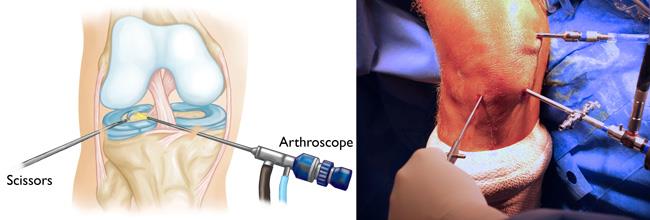
Your surgeon's first task is to properly diagnose your problem. They will insert the arthroscope and use the image projected on the screen to guide it. If surgical treatment is needed, your surgeon will insert tiny instruments through other small incisions.
您的外科医生的首要任务是对您的问题作出准确诊断。他们将插入关节镜,并使用投射在屏幕上的图像来引导其操作。如果需要外科治疗,您的外科医生将通过其他小切口插入微小器械。
Specialized instruments are used for tasks like shaving, cutting, grasping, and meniscal repair. In many cases, special devices are used to anchor stitches into bone.
专用器械用于刮削、切割、夹持和半月板修复等操作。在许多情况下,会使用专门装置将缝线固定到骨骼上。
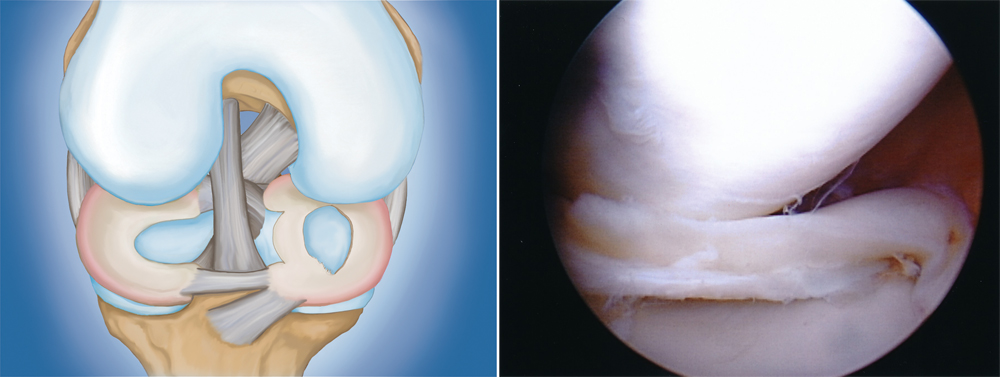
Click on the video below to watch arthroscopic treatment for a bucket handle tear. (Video courtesy of Stuart J. Fischer, MD, FAAOS)
点击下面的视频观看用于处理柄状撕裂的关节镜手术视频。(视频由 Stuart J. Fischer, MD, FAAOS 提供)
Closure 缝合/闭合
Most knee arthroscopy procedures last less than an hour. The length of the surgery will depend upon the findings and the treatment necessary.
大多数膝关节镜手术持续不到一小时。手术时间将取决于术中所见和所需的治疗措施。
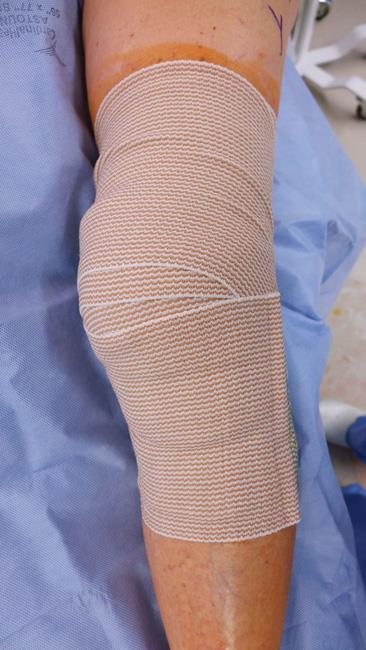
Your surgeon may close each incision with a stitch or steri-strips (small adhesive strips), then wrap your knee with a soft bandage. Sometimes braces are used post-operatively if a repair or reconstruction is performed that must be protected.
您的外科医生可能会用缝线或无菌贴条(小型粘性条)缝合每个切口,然后用柔软的绷带包扎膝关节。如果进行了需要保护的修复或重建手术,术后有时会使用支具。
Complications 并发症
The complication rate after arthroscopic surgery is very low. If complications occur, they are usually minor and are treated easily. Possible postoperative problems with knee arthroscopy include:
关节镜手术后的并发症发生率非常低。如果发生并发症,通常是轻微的且易于处理。膝关节镜术后可能出现的问题包括:
- Infection 感染
- Blood clots 血栓
- Knee stiffness 膝关节僵硬
- Accumulation of blood in the knee
膝内血液积聚 - Bruising or swelling 瘀斑或肿胀
Recovery 恢复
After surgery, you will be moved to the recovery room and should be able to go home within 1 or 2 hours. Be sure to have someone with you to drive you home and check on you that first evening.
手术后,您将被送往恢复室,通常在 1 到 2 小时内即可回家。请确保有人陪同开车送您回家,并在手术当天晚间陪护并观察您的情况。
While recovery from knee arthroscopy is faster than recovery from traditional open knee surgery, it is important to follow your doctor's instructions carefully after you return home.
虽然膝关节镜手术后的恢复比传统开放膝关节手术快,但回家后务必仔细遵循医生的指示。
Pain Management 疼痛管理
After surgery, you will feel some pain. This is a natural part of the healing process. Your doctor and nurses will work to reduce your pain, which can help you recover from surgery faster.
手术后,您会感到一些疼痛。这是愈合过程的自然组成部分。您的医生和护士会努力减轻您的疼痛,这有助于您更快从手术中恢复。
Medications are often prescribed for short-term pain relief after surgery. Many types of medicines are available to help manage pain, including opioids, non-steroidal anti-inflammatory drugs (NSAIDs), and local anesthetics. Your doctor may use a combination of these medications to improve pain relief, as well as minimize the need for opioids.
术后常常会开具药物以在短期内缓解疼痛。可用于控制疼痛的药物类型有多种,包括阿片类药物、非甾体抗炎药(NSAIDs)和局部麻醉剂。医生可能会将这些药物组合使用,以改善镇痛效果并尽量减少对阿片类药物的依赖。
Be aware that although opioids help relieve pain after surgery, they are narcotics and can be addictive. Opioid dependency and overdose have become a critical public health issues in the U.S. It is important to use opioids only as directed by your doctor and to stop taking them as your pain begins to improve. Talk to your doctor if your pain has not begun to improve within a few days of your surgery.
请注意,尽管阿片类药物有助于缓解术后疼痛,但它们是麻醉性药物,可能成瘾。阿片类药物依赖和过量已成为美国一项严重的公共卫生问题。重要的是仅按医生指示使用阿片类药物,并在疼痛开始好转时停止服用。如果手术后几天内疼痛尚未开始好转,请与您的医生讨论。
Medications 药物
In addition to medicines for pain relief, your doctor may recommend medication such as aspirin to lessen the risk of blood clots.
除止痛药外,医生可能会建议服用阿司匹林等药物以降低血栓风险。
Swelling 肿胀
Keep your leg elevated as much as possible for the first few days after surgery. Apply ice as recommended by your doctor to relieve swelling and pain. Your weight-bearing status after surgery will be dictated by what is performed during the surgery.
术后头几天尽量抬高患腿。按医生建议敷冰以减轻肿胀和疼痛。术后承重情况将由手术中实施的具体操作决定。
Dressing Care 敷料护理
You will leave the surgical facility with a dressing covering your knee. Keep your incisions clean and dry. Your surgeon will tell you when you can shower or bathe, and when you should change the dressing.
出院时你的膝盖上会覆盖敷料。保持切口清洁干燥。你的外科医生会告知何时可以淋浴或泡澡,以及何时应更换敷料。
Your surgeon will see you in the office after surgery to check your progress, review the surgical findings, and begin your postoperative treatment program.
您的外科医生将在术后到门诊复查,以评估您的恢复情况、回顾手术发现,并开始您的术后治疗方案。
Bearing Weight 承重
Most patients need crutches or other assistance after arthroscopic surgery. Your surgeon will tell you when it is safe to put weight on your foot and leg. If you have any questions about bearing weight, call your surgeon.
大多数患者在关节镜手术后需要拐杖或其他辅助器具。您的外科医生会告诉您何时可以安全地对足部和腿部负重。如对负重有任何疑问,请致电您的外科医生。
Rehabilitation Exercise 康复锻炼
You should exercise your knee regularly for several weeks after surgery. This will restore motion and strengthen the muscles of your leg and knee.
您应在术后数周内定期锻炼膝关节。这将恢复关节活动度并强化腿部和膝关节的肌肉。
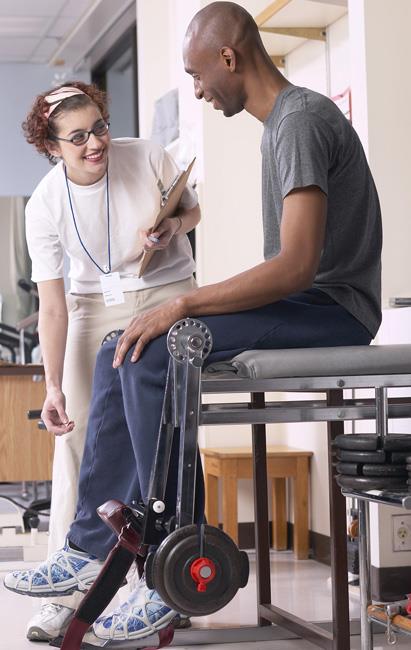
Therapeutic exercise will play an important role in how well you recover. A formal physical therapy program may improve your final result.
治疗性锻炼将在您的康复效果中发挥重要作用。正规的物理治疗方案可能会改善最终效果。
Driving 驾驶
Your doctor will discuss with you when you may drive. Typically, patients are able to drive from 1 to 3 weeks after surgery if the procedure was minor. More time may be needed for more extensive repairs or reconstructions.
您的医生会与您讨论何时可以开车。通常,如果手术属于较小的操作,患者在术后 1 到 3 周即可开车。对于较大范围的修复或重建,可能需要更长时间。
Outcome 结果
Many people return to full, unrestricted activities after arthroscopy. Your recovery will depend on the type of damage that was present in your knee.
许多人在关节镜手术后能恢复到完全、不受限制的活动。你的恢复情况将取决于膝关节存在的损伤类型。
Unless you have had a ligament reconstruction, meniscus repair, or cartilage restoration, you should be able to return to most physical activities after 6 to 8 weeks, or sometimes much sooner. You may, however, need to avoid higher impact activities for a longer time.
除非你接受了韧带重建、半月板修复或软骨修复,否则在 6 到 8 周后,或有时更早,你应该能够恢复大多数体育活动。然而,你可能需要更长时间避免高冲击活动。
If your job involves heavy work, it may be longer before you can return to your job. Discuss with your doctor when you can safely return to work.
如果你的工作涉及重体力劳动,可能需要更长时间才能重返工作岗位。请与医生讨论何时可以安全复工。
For some people, lifestyle changes are necessary to protect the joint. An example might be changing from high impact exercise (such as running) to lower impact activities (such as swimming or cycling). These are decisions you will make with the guidance of your surgeon.
对于某些人来说,为保护关节需要改变生活方式。比如将高冲击运动(如跑步)改为低冲击活动(如游泳或骑行)。这些决定应在外科医生的指导下共同做出。
Sometimes, the damage to your knee can be significant enough that it cannot be completely reversed with arthroscopic surgery. More extensive operations may be needed in the future for these more severe conditions.
有时,膝关节的损伤可能严重到关节镜手术无法完全逆转的程度。对于这些较为严重的病情,今后可能需要进行更大范围的手术。


Last Reviewed 最后审阅日期
January 2022 2022 年 1 月
Contributed and/or Updated by
贡献者和/或更新者
AAOS does not endorse any treatments, procedures, products, or physicians referenced herein. This information is provided as an educational service and is not intended to serve as medical advice. Anyone seeking specific orthopaedic advice or assistance should consult his or her orthopaedic surgeon, or locate one in your area through the AAOS Find an Orthopaedist program on this website.
AAOS 不为本文中提及的任何治疗、程序、产品或医生背书。此信息作为教育服务提供,并不旨在作为医疗建议。任何寻求特定骨科建议或协助的人应咨询其骨科外科医生,或通过本网站的 AAOS “查找骨科医生” 计划在您所在地区寻找医生。
