
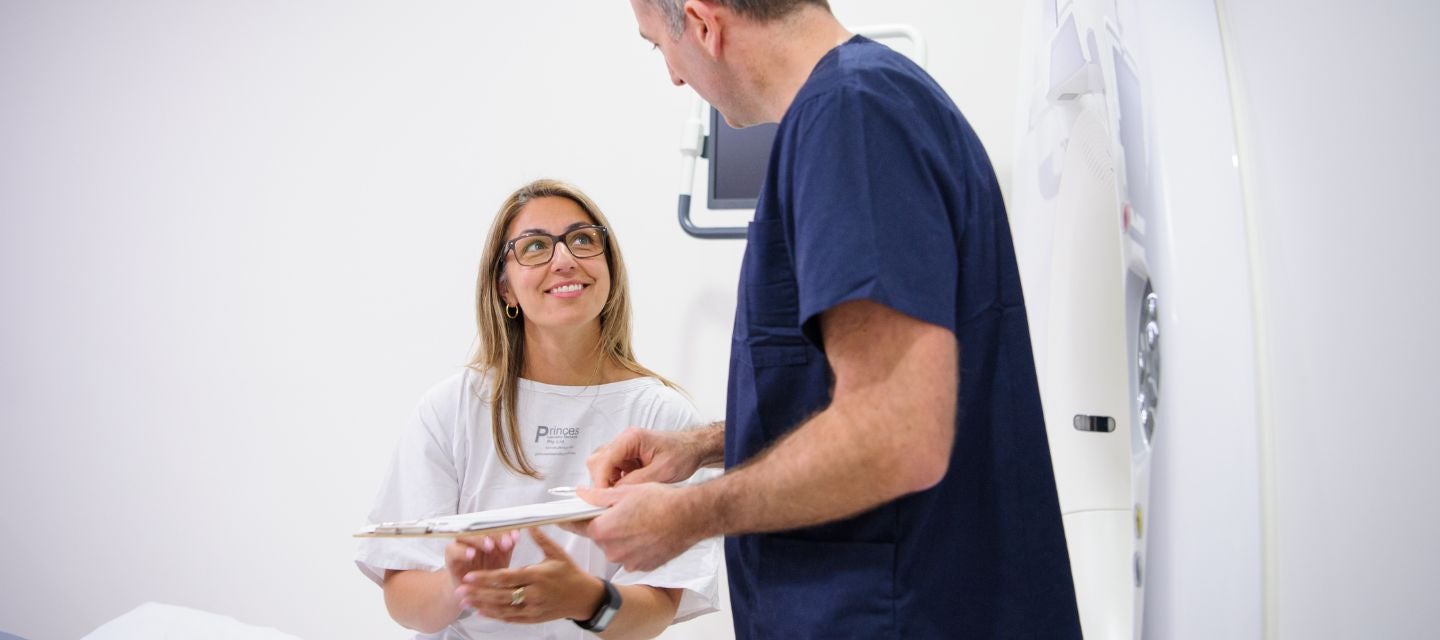
CT scan 101: everything you need to know
A collection of important resources for patients needing a CT scan. At I-MED Radiology, we’re committed to finding answers, helping your doc ...
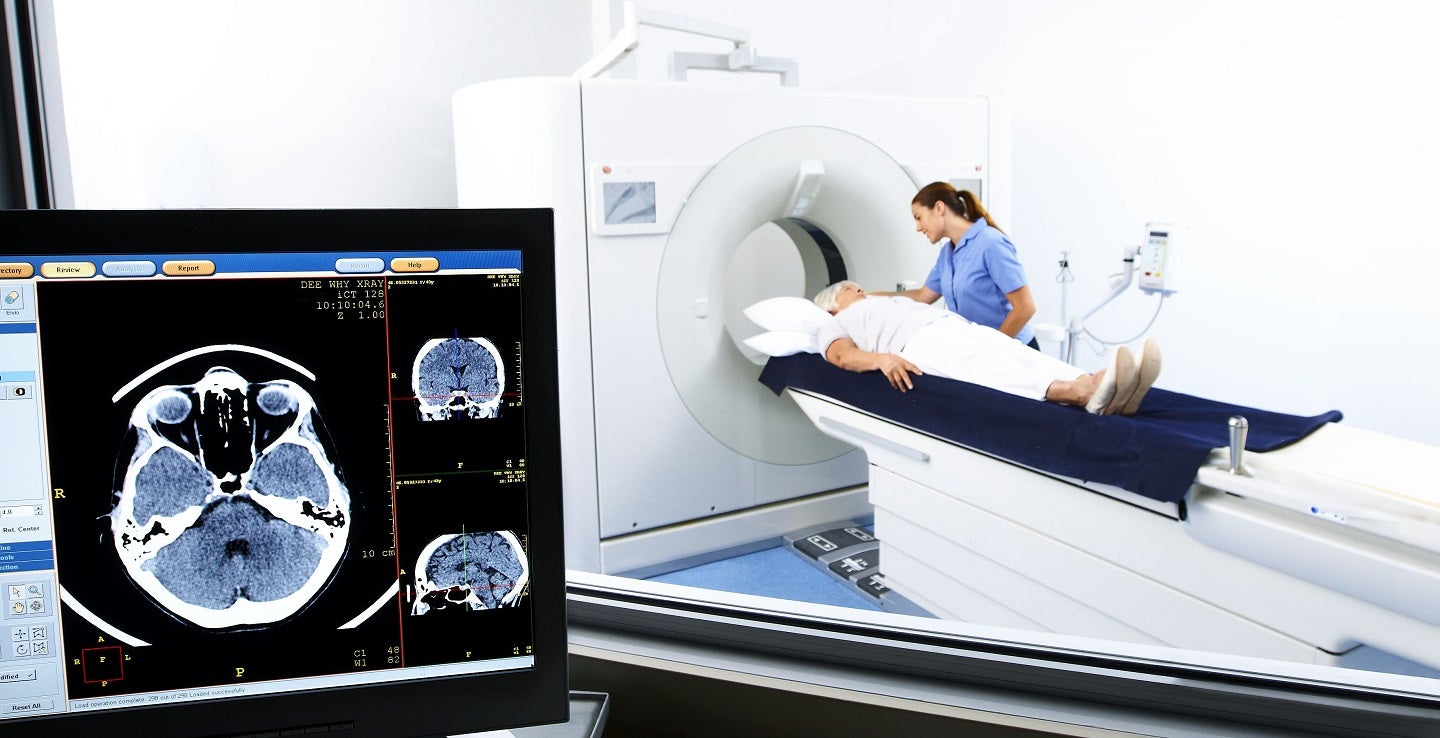
Computed tomography is commonly referred to as a ‘CT scan’. It is a way of using x-rays to take pictures or images in very fine slices through the part of the body that the doctor has asked to be investigated. One way to think of it is of taking slices through a loaf of bread, with more slices providing increasingly detailed images. The most recent machines are multi-slice (MSCT) scanners, producing up to 320 slices that are often less than 1mm thick.
计算机断层扫描通常称为“CT 扫描”。它是一种使用 X 射线对医生要求检查的身体部位进行非常精细切片成像的方法。一种比喻是对面包进行切片,切得越多,图像就越详细。最新的设备为多层(MSCT)扫描仪,可产生多达 320 层的切片,通常每层厚度不足 1 毫米。
Once the radiographer has taken the scan, these very thin slices can be put all together to reconstruct the loaf (or in this case your body). Once they are put back together the radiographer can cut it into the slices that will help the radiologist (a doctor who has specialised in diagnostic imaging) to see the parts of the body that are of interest.
放射技师完成扫描后,这些非常薄的切片可以全部拼接在一起以重建“面包”(在此情况下即您的身体)。拼接完成后,放射技师可以按放射科医师(专门从事诊断影像学的医生)需要的切面重新切割这些图像,以便查看感兴趣的身体部位。
With all of these different slices and 3D reconstructions, the radiologist will have a very detailed picture of the structures making up your body. This should help them to make a diagnosis so that the right treatment can be planned as soon as possible.
通过这些不同的切片和三维重建,放射科医师将获得对构成您身体的结构的非常详细的图像。这应有助于他们做出诊断,从而尽快制定出正确的治疗方案。
Our commitment to your safety is our highest priority. I-MED Radiology invests time, effort and resources into making sure that every patient receives a quality medical imaging service utilising the most appropriate imaging techniques and the lowest possible dose of radiation. Our radiology staff are highly skilled technicians who are licensed to operate our modern diagnostic imaging equipment. They also actively participate in ongoing training and a process of continuous improvement to ensure our high safety and quality standards are maintained.
我们对您安全的承诺是最高优先事项。I‑MED 放射学投入时间、精力和资源,确保每位患者都能接受高质量的医学影像服务,采用最合适的影像技术并尽可能降低辐射剂量。我们的放射技术人员均为具证上岗的高技能操作员,能够操作现代诊断影像设备。他们还积极参与持续培训与持续改进流程,以确保我们的高安全性和质量标准得到保持。
We have implemented a radiation-dose-monitoring software solution (DOSE) in 208 CT, PET and SPECT systems across our Network. This innovative software is designed to optimise how we monitor, evaluate and report radiation doses — reinforcing our commitment to patient safety, data accuracy and clinical excellence. I-MED is proud to be the first to adopt Qaelum’s cutting-edge technology, DOSE, in the Australasian region.
我们在网络范围内的 208 台 CT、PET 和 SPECT 系统中实施了辐射剂量监测软件解决方案(DOSE)。该创新软件旨在优化我们对辐射剂量的监测、评估与报告方式——强化我们对患者安全、数据准确性和临床卓越性的承诺。I‑MED 自豪地成为在澳大拉西亚地区率先采用 Qaelum 前沿技术 DOSE 的机构。
Do you speak a language other than English? You can watch this video using translated subtitles - follow these instructions to select your language.
您会说除英语以外的语言吗?您可以观看带有翻译字幕的视频——按以下说明选择您的语言。
Fees for radiology procedures vary and depend on a number of factors, including the type of procedure, what has been requested on your referral and the Medicare rebates available. We will advise you of any fees associated with your examination at the time of making your appointment or when you arrive at the clinic. Alternatively you can contact us and one of our team will be happy to answer any queries regarding fees. For more information about fees and rebates please visit our account FAQs.
Find a complete list of I-MED Radiology clinics offering CT scanning here
在此查找提供 CT 扫描服务的所有 I-MED 放射科诊所完整名单
If necessary, our clinic will provide you with instructions for your CT scan prior to your appointment. These instructions are very important as they may affect the accuracy of the test or require that the test be rebooked if you are not properly prepared for the CT scan.
如有必要,我院将在您预约前向您提供 CT 检查的相关说明。这些说明非常重要,因其可能影响检查的准确性;若您未按要求做好准备,可能需要重新安排检查。
Some tests require no preparation, these include: brain, sinus or facial bones, temporal bones (inner ear), spine, knee or wrist, and CT scans of the bones.
有些检查无需准备,包括:脑部、鼻窦或面颅骨、颞骨(内耳)、脊柱、膝关节或腕关节,以及骨骼 CT 扫描。
Many types of CT scan require an injection of an iodinated contrast material to show blood vessels and some organs. For these tests we will ask you to fast (not eat) prior to your appointment. It is important that the need to fast does not affect you if you have special dietary requirements (e.g. diabetes). Please check with your doctor or our clinic if you have any concerns.
许多类型的 CT 扫描需要注射含碘造影剂以显示血管和某些器官。对于这些检查,我们会要求您在预约前禁食(不进食)。如果您有特殊饮食要求(例如糖尿病),需要禁食可能会对您产生影响,请务必与您的医生或我们诊所联系以获得建议。
Chest CT preparation: 胸部 CT 准备:
Abdomen/pelvis CT & abdomen/pelvis + chest CT:
腹部/盆腔 CT 及 腹部/盆腔 + 胸部 CT:
All patients are asked if they have kidney disease, diabetes or if taking metformin. If ‘yes’ to any of the above, ask patient to bring copies of recent blood tests (within the last 3 months) to their appointment.
所有患者都会被询问是否有肾脏疾病、糖尿病或是否正在服用二甲双胍。如果对上述任一问题回答“是”,请患者在就诊时携带最近三个月内的血检报告复印件。
If you do require an iodinated contrast injection for your test, the radiologist or radiographer will discuss this with you. They will then use a needle to insert a cannula (a small plastic tube) into a vein in your arm or the back of your hand so that the iodine contrast can be inserted into the cannula during the test.
如果您的检查需要注射含碘造影剂,放射科医师或放射技师会与您讨论。他们会用针在您手臂或手背的静脉处插入一根静脉留置针(一个小塑料管),以便在检查过程中通过留置针注入碘造影剂。
While the iodinated contrast used for injections is considered very safe, there are precautions that must be taken when using it, particularly if you have poor kidney function or diabetes.
用于注射的含碘造影剂被视为非常安全,但在使用时必须采取一些预防措施,尤其是当您肾功能不良或患有糖尿病时。
Tests investigating your abdomen may require you to drink a different kind of iodinated contrast solution to outline your intestine (part of your digestive system). This will also require fasting. This drink is given in a different way depending where you are having the CT scan done. You will usually be asked to drink part of the whole dose an hour prior to the scanning time and the rest of it just before entering the scanning room. Depending on the type of scan that you are having you may be asked to change into a gown to avoid parts of your clothing affecting the scan.
检查腹部时,可能需要您口服另一种含碘造影液以示踪肠道(消化系统的一部分)。这也需要禁食。该饮剂的给药方式取决于您在哪做 CT 检查。通常会要求您在扫描时间前一小时饮用全部剂量的一部分,并在进入扫描室前再饮用剩余部分。根据所做扫描的类型,您可能被要求换上检查袍,以避免衣物部分影响扫描结果。
If you have any concerns regarding fasting, the iodinated contrast injection or your medication you should contact your own doctor or our clinic prior to your appointment.
如果您对禁食、含碘造影剂注射或所服药物有任何疑问,应在预约前联系您的主治医生或我们的门诊。
It is important to follow the instructions you are given to ensure that the test is done safely, accurately and efficiently and so that you do not need to have the scan rescheduled or repeated.
遵照所给指示非常重要,以确保检查安全、准确且高效进行,并避免需重新安排或重复扫描。
CT scans are designed to look at specific parts of the body and are tailored for each person, to investigate their particular condition. This means that all CT scans are slightly different.
The CT scan equipment is a large square machine with a circular hole, sometimes described as looking like a “donut”. The process involves you lying on a bed attached to the scanner (this may be feet first or head first depending on the part of the body being looked at). The bed will then be raised up to a height level with the circular hole in the scanner and the bed slides in and out of the hole several times while pictures are being taken. It is important to try not to move during the scan as it will affect the quality of the pictures and make them harder for the radiologist to interpret.
The radiographer performing the CT scan may ask you to hold your breath for some scans. The length of time for each breath hold is usually under 10 seconds. Most scanners in use now are able to give instructions in different languages to help you understand what you need to do and what is happening. They will also often have ways of communicating with you if your hearing is poor.
The first few scans are usually done to set up the machine ready for the test. When the test is programmed into the computer by the radiographer and the scan is ready to go, they may remind you to keep still. If your test requires an iodinated contrast injection, the radiographer will come into the room to administer it using either a hand held syringe or a mechanical pump. The pump helps to put the iodinated contrast in at a set rate and allows for the scanner to target specific areas of the body.
When the iodinated contrast is injected, most people will get a strange metallic taste in the mouth and feel a warm sensation through the body. This warm sensation may concentrate around the groin or buttock region and can feel like you may have wet yourself, even though you have not. Do not be concerned if this happens, it is a common sensation and usually goes away within a couple of minutes.
Once the radiographer has reviewed the images briefly to check that the appropriate areas have been shown, they will come into the room to help you off the bed. The radiographer will not be able to give you any results after the CT scan; this is the responsibility of your doctor and the radiologist who interprets the images from the scan and provides a report to your doctor.
Once the CT scan is completed, you will have the cannula removed so you can go home.
The time taken to complete the CT scan will vary, depending on the examination that has been requested by your referring doctor. CT scans that do not require an injection and are usually quite quick and may be completed within 5 minutes.
In the case of CT scans which require you to drink a contrast solution or have an injection, the preparation time is often much longer than that of the scan itself. When a drink is required for an abdominal scan (of your stomach), you are often asked to have that drink an hour before the appointment time. This may be done prior to you arriving at the hospital or radiology practice or while you are in the waiting area.
Even when you are having a CT scan that requires an injection or a drink and other preparation, the time taken for the scan is usually under ten minutes.
CT scans are a fast, effective and accurate way of assisting your doctor to make a diagnosis and treat your condition.
The vast majority of people who have a CT scan have no after effects at all. After the test, you should be able to eat and drink as normal and resume regular activities.
If you have an injection of iodinated contrast, the sensations of warmth and the strange taste usually experienced should go away within a few minutes. In very uncommon cases, some people may be allergic to the iodinated contrast given into the vein in your arm or the back of your hand.
It is not possible to predict if a person will be allergic to the iodinated contrast, though our staff are well trained to deal with allergic reactions should they arise. It is important to make the radiographer aware of any other allergies that you may have, prior to having the injection.
People who are allergic to the iodinated contrast used in CT scans may get some of the following symptoms:
If you do feel any of these symptoms after your CT scan, it is important to tell the radiographer immediately. If these feelings come on after leaving the clinic, you should return immediately (if close by), or attend the nearest doctor or emergency department.
Radiation exposure:
As is the case with most tests and medications prescribed by your doctor, CT does have risks that cannot be avoided.
Our staff are highly trained to minimise these risks by using the lowest possible radiation dose to achieve quality images that allow the radiologist to make an accurate diagnosis. The radiographer will only scan the part(s) of the body required, and do their best to avoid scanning areas that are particularly sensitive to radiation - this may involve the use of shields made of lead or bismuth (a type of metallic substance).
A CT scanner uses x-rays to obtain the pictures required for the radiologist to make a diagnosis. As is commonly known, x-rays are a form of radiation and must be used carefully by trained professionals to decrease the risks involved.
These risks are:
Minimising risks from radiation include making sure that every CT scanner in use is regularly maintained and calibrated (tested and set to ensure accuracy) by specialised technicians. This is required by State and Federal laws.
Your doctor will receive a written report on your test as soon as is practicable.
It is very important that you discuss the results with the doctor who referred you so they can explain what the results mean for you.
Product information for diabetic sensors (CGM) and insulin pumps indicate the potential for malfunction if directly exposed to x-rays. Please notify staff of any diabetic equipment attached to you prior to your procedure/appointment. You MAY be asked to remove or disconnect the device prior to the exam, or more closely monitor their performance/accuracy after the exam.
This information has been reviewed and approved by Dr Ronald Shnier (I-MED Chief Medical Officer).
This information has been reviewed and approved by Dr Ronald Shnier (I-MED Chief Medical Officer).
本信息已由 Ronald Shnier 医生(I-MED 首席医疗官)审核并批准。
Fees for radiology procedures vary and depend on a number of factors, including the type of procedure, what has been requested on your referral and the Medicare rebates available. We will advise you of any fees associated with your examination at the time of making your appointment or when you arrive at the clinic. Alternatively you can contact us and one of our team will be happy to answer any queries regarding fees. For more information about fees and rebates please visit our account FAQs.
放射学检查的费用各不相同,取决于多种因素,包括检查类型、转诊单上要求的内容以及可获的 Medicare 报销金额。我们将在您预约时或您到诊所时告知您与检查相关的任何费用。或者,您也可以联系我们,我们的工作人员将很乐意回答有关费用的任何疑问。有关费用和报销的更多信息,请访问我们的账单常见问题页面。